Why ‘The Friendly Snowflake’ Is a Must-Read for Children

Rating: 5/5

My description of this book in 10 words or less : A rare gem of a book!

For ages: 6-10 years and up

Genre: Junior Fiction, Fable

Warnings : none

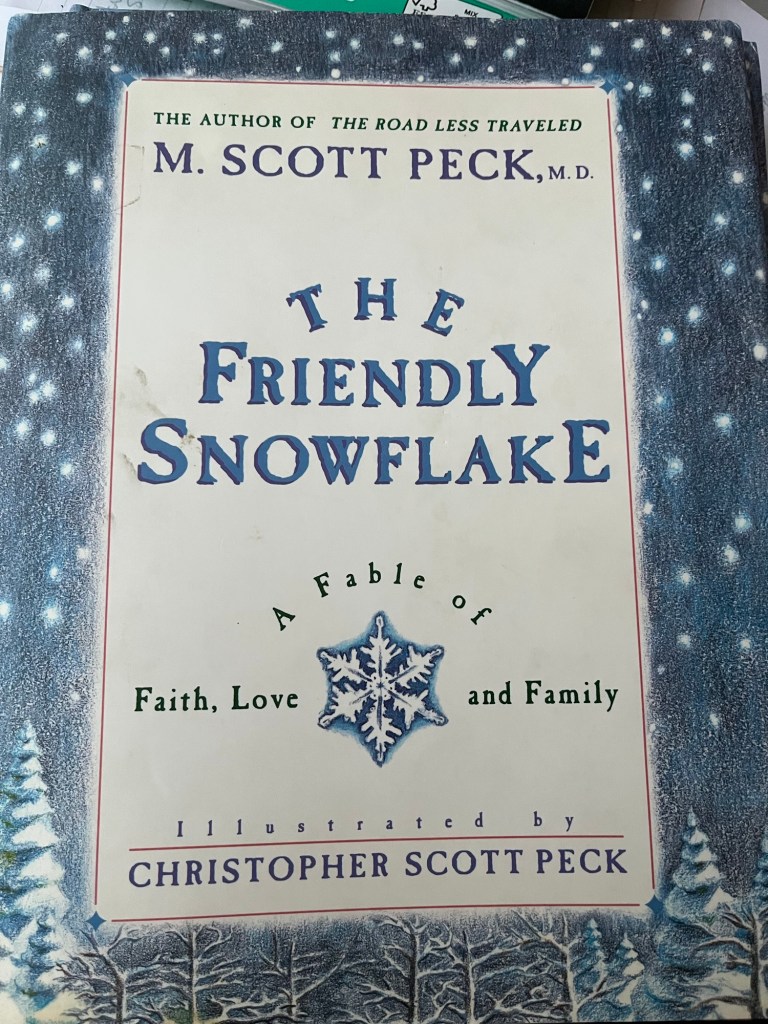
‘The Friendly Snowflake’ by M. Scott Peck is a fable for children about faith, love and family. When it was first published in 1992 it sold 155,000 copies. It is now out of print but I think it has a lot to offer. If you are a parent you may like to purchase a second-hand copy for your child online. The story is illustrated by M. Scott Peck’s son, Christopher Scott Peck.

Parents wanted to know

The story : A young girl ruggs up and ventures out into the snow to play. Whilst enjoying the day a snow flake happens to falls on the tip of her nose.

She gives the snowflake the name “Harry” and sees it as ‘a friendly snowflake.’
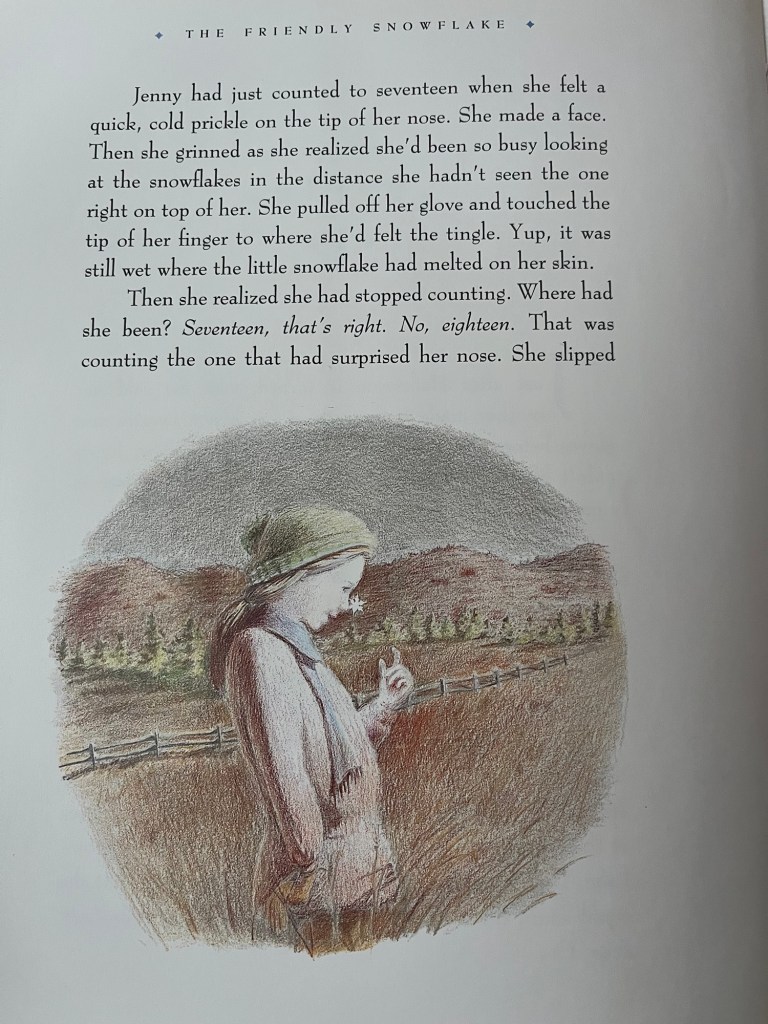
She counts the number of snowflakes that fell and, finding there were only a few, asks what were the chances of that particular snowflake falling just on her nose at that time :

“Since there were so few snowflakes, wasn’t it something that one of them had managed to find its way right to the tip of her nose …Why? Maybe it had wanted to meet her. Maybe it was a friendly snowflake.” (p.11)

“That’s silly”….said her brother. “Snowflakes aren’t friendly….They just land where they land. It was an accident…just a statistical happening.” (p.12)

Their Mother ends the first ‘discussion.’ hinting that neither child has enough evidence to go on to win the argument. So they leave that one go. However, the Mother says that it can be ‘very important sometimes to decide whether something’s an accident or whether there’s meaning behind it.” (p.13)

An interesting thought in a world that always seems to demand strictly factual cause and effect answers. The Mother’s statement sows the seed of thought for the rest of the story.

The girl’s brother is said to be interested in science due to his Father who is a good role model. Her brother is reasonable and debates his sister in a reasonable manner. Although he cannot see the value of her arguments, he opens a book and shows her what snowflakes look like under the microscope. He is willing to talk and debate even if he doesn’t at first agree.

The ongoing discussions about spirituality, the soul, snowflakes, serendipity and whether things happen for a reason or not make for a fascinating read.

Her brother showed her what a snowflake looks like under the magnifying glass.

What follows is a quite amazing series of debates between the children about whether the snowflakes clump together because they are ‘…related like a family’, or whether they ‘just happen to be next to each other in the air.’ Jenny persists with her argument that it is theoretically possible that the snowflakes are ‘related, like a family’.

She brings the debate to the fact she is close to her brother in the same living room and that is no ‘accident.’ However, her brother still doesn’t get her argument, and she privately regrets that anything he cannot explain he always seems to say is ‘an accident.’

A strength of the book is that it shows how to argue purposefully and rationally in support of things that are difficult to prove. It is a hopeful book which hints at the value of mystery and the fact that not everything can be explained.

For those readers who want to listen, there is much here to ponder on.
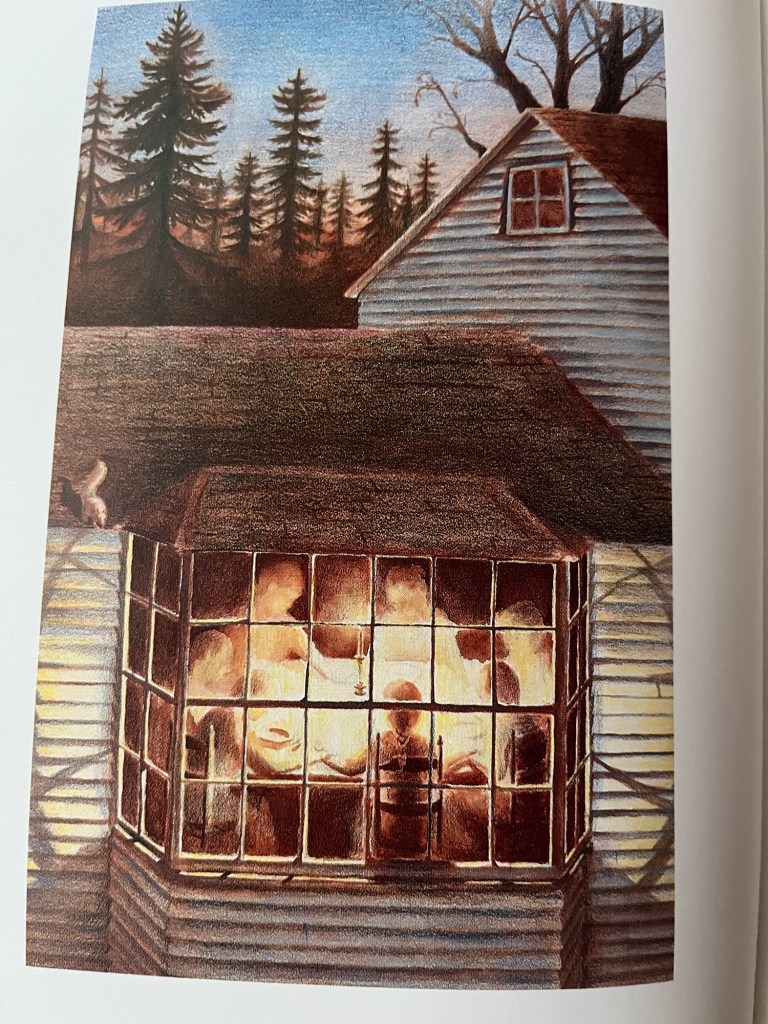
‘There’s lots and lots we can’t explain. The world is full of mystery.’ her Dad says. Jenny likes living in a world full of mystery. 

Here is one of my favourite quotes from the book:

“She wondered…God was certainly good to them. But did God actually love her? He -or She- was important and powerful. How could God possibly care for just one person, particularly for a person as small and ordinary as herself? But then she remembered Harry (the snowflake.). Harry had gone to the trouble to find her. Maybe God was like that. …maybe God could somehow be both in a giant storm and in a single little snowflake…” p.30
Christmas is nearly here!

With Christmas just around the corner here are a couple of beautiful Christmas picture books. Although published some time ago they are still favourites of mine.

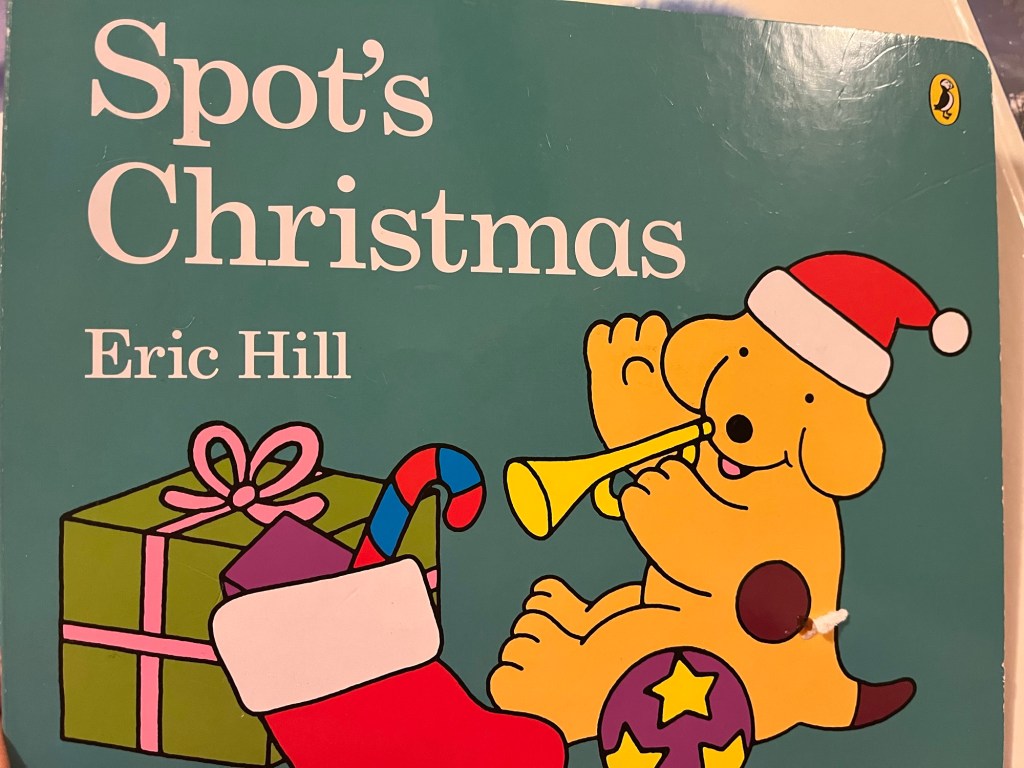
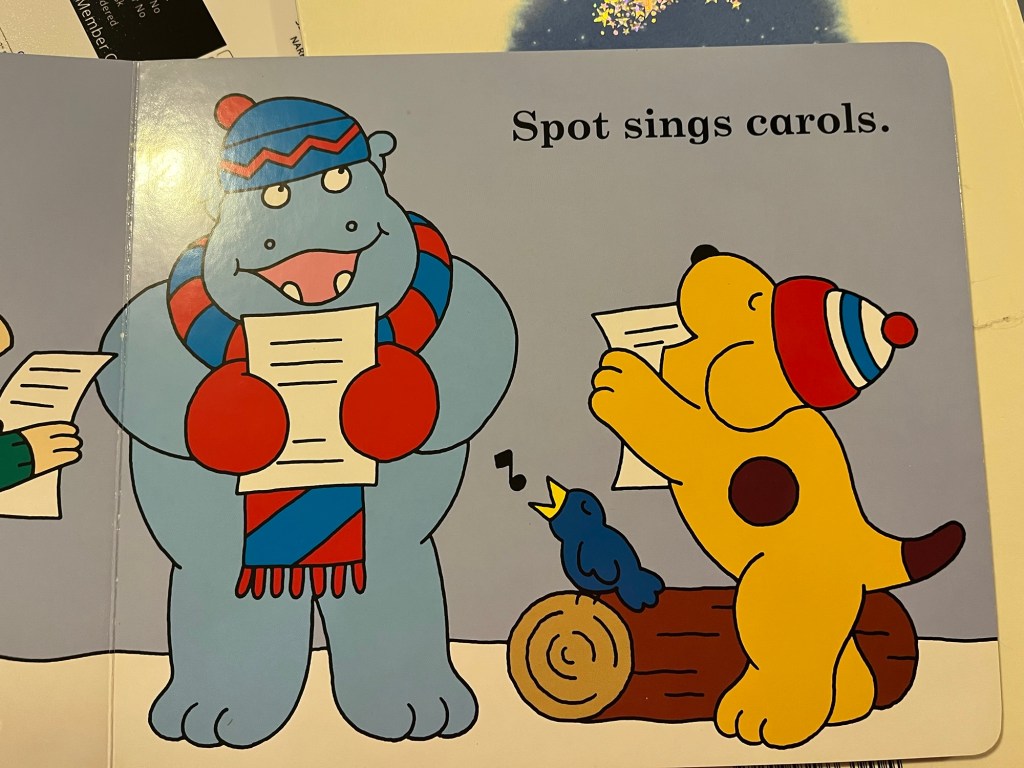
‘Spot’s Christmas’ by Eric Hill needs no further introduction – kids love it!

Rating: 5/5

Recommended age range: 2-5 years

Warnings: none

Genre: Picture books for children

Join Spot as he puts up the Christmas tree, bakes cookies, draws cards, sings carols, wraps presents and leaves milk and cookies for Father Christmas!
‘Fa la la La’

According to Wikipedia , author Eric Hill first conceived of the idea of ‘Spot’ when he noticed his 3-year-old son enjoyed lifting up a paper design. The Spot books are based on a comic with a liftable flap for a child to open and peer under. The Spot books rapidly became bestsellers and due to their popularity were made into a tv series and franchise.

Spot has been read to many children in preschool storytimes at libraries over the years and never fails to please.

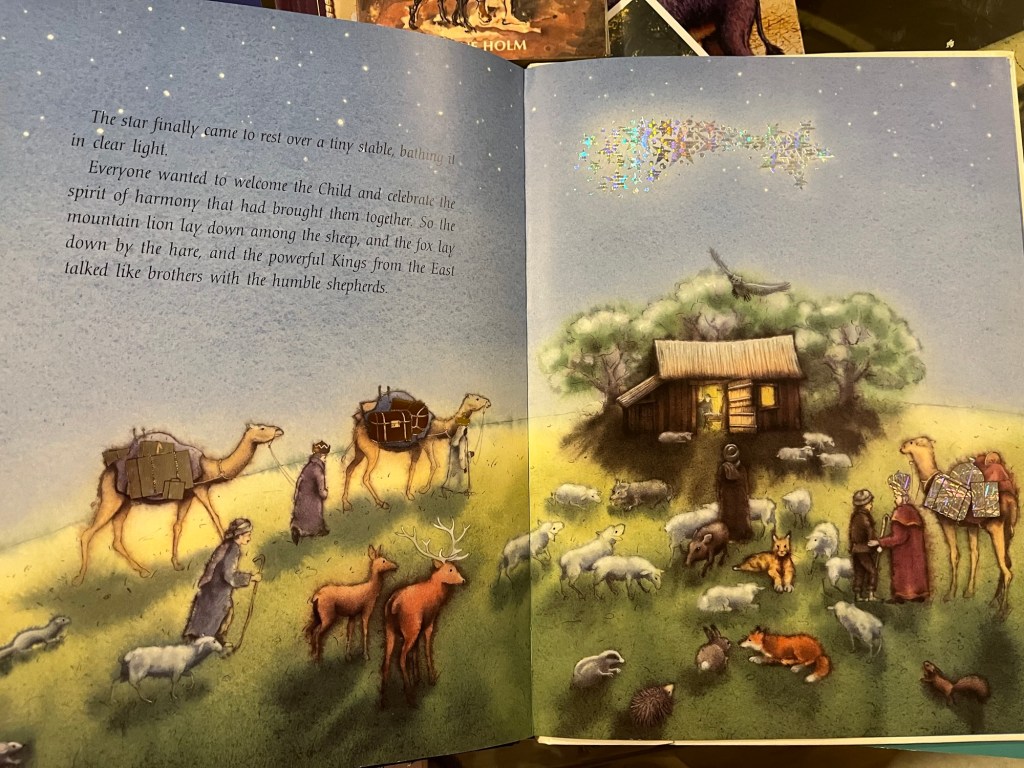
The other picture book I must mention is ‘The Christmas star’ by Swiss author Marcus Pfister. He is also the well-loved author of the well-known story: ‘The Rainbow Fish’ . ‘The Christmas Star’ is a wonderful religious story where children can follow the shining star as it guides shepherds, wise men and animals to the stable where the holy child has been born.

The Christmas Star by Marcus Pfister

Both picture books are still available on eBay as used Books. They are good oldies that, if in good condition, make lovely presents.

A beautiful picture book story for Christmas
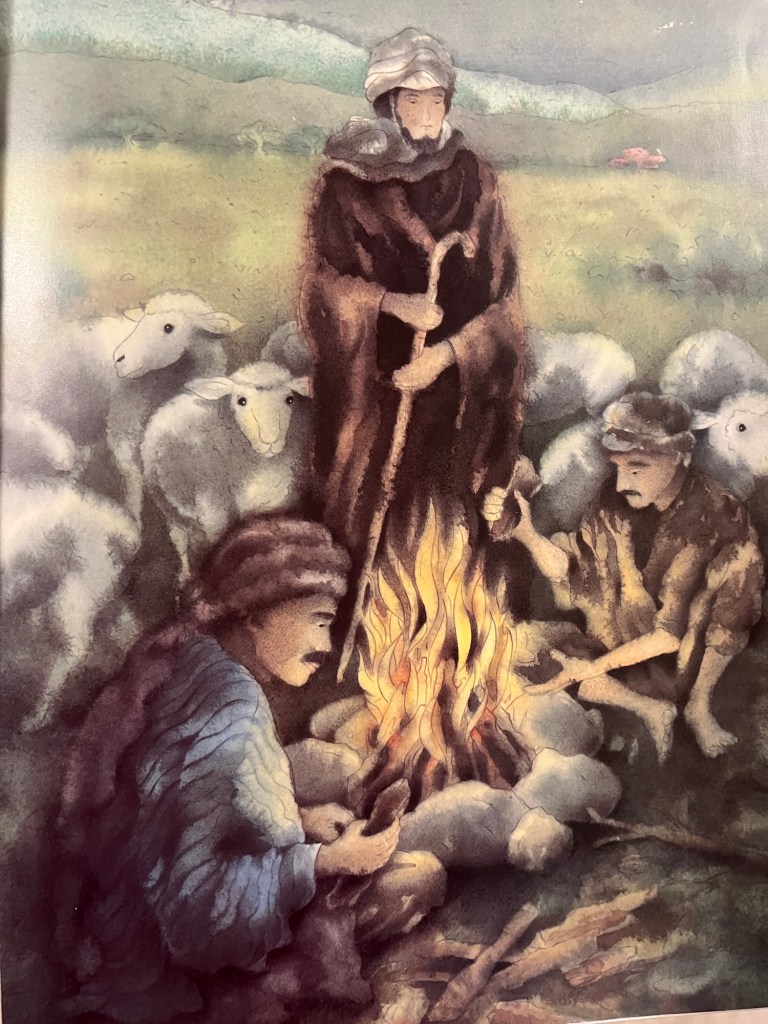
The three shepherds are visited by angels.
Setting the scene at the beginning of the book…
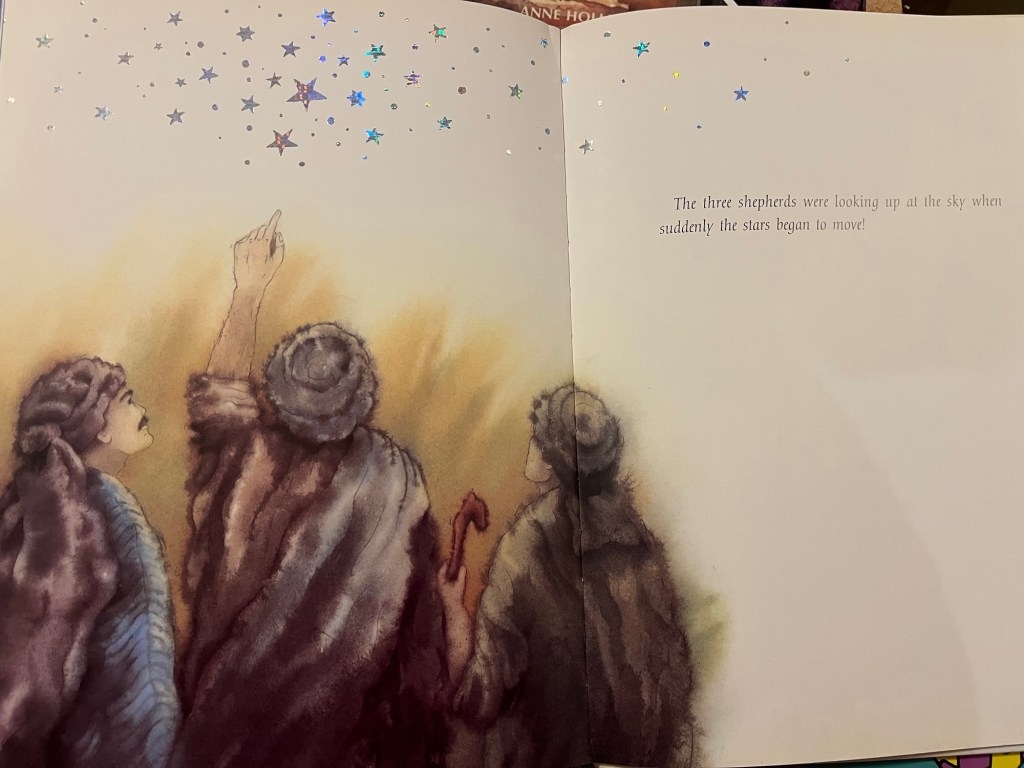
The stars ‘..suddenly…began to move!’
It ‘..swept a radiant glow across the deep blue night.’
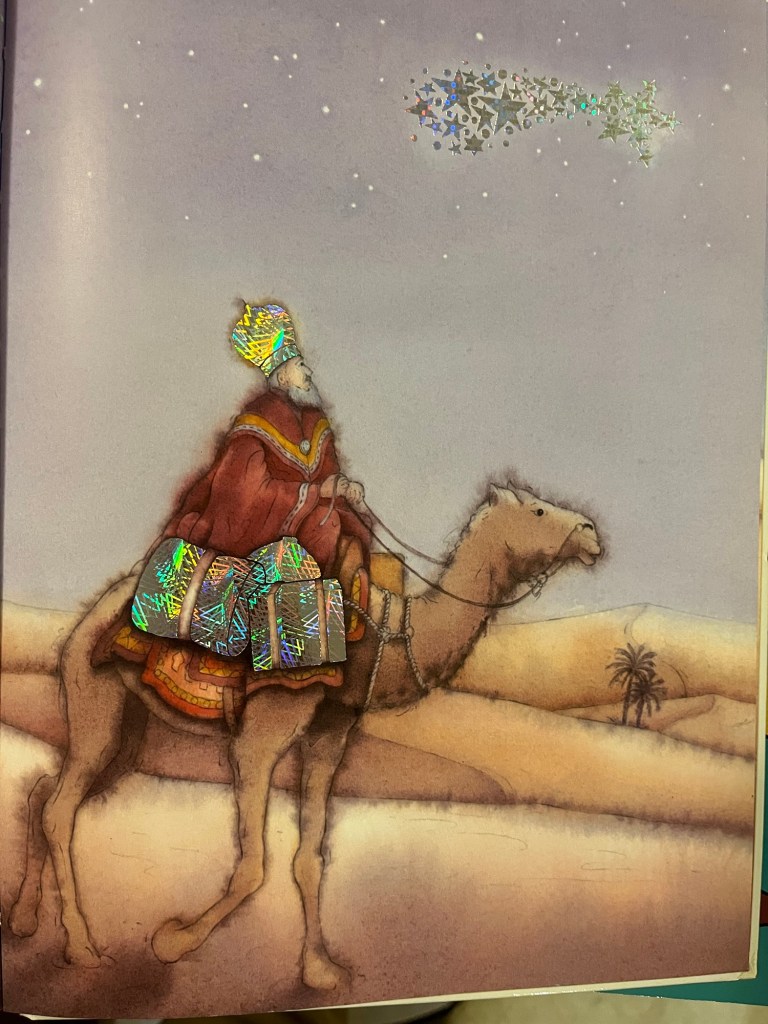
A wise man from the East follows the star, and is joined by by two others
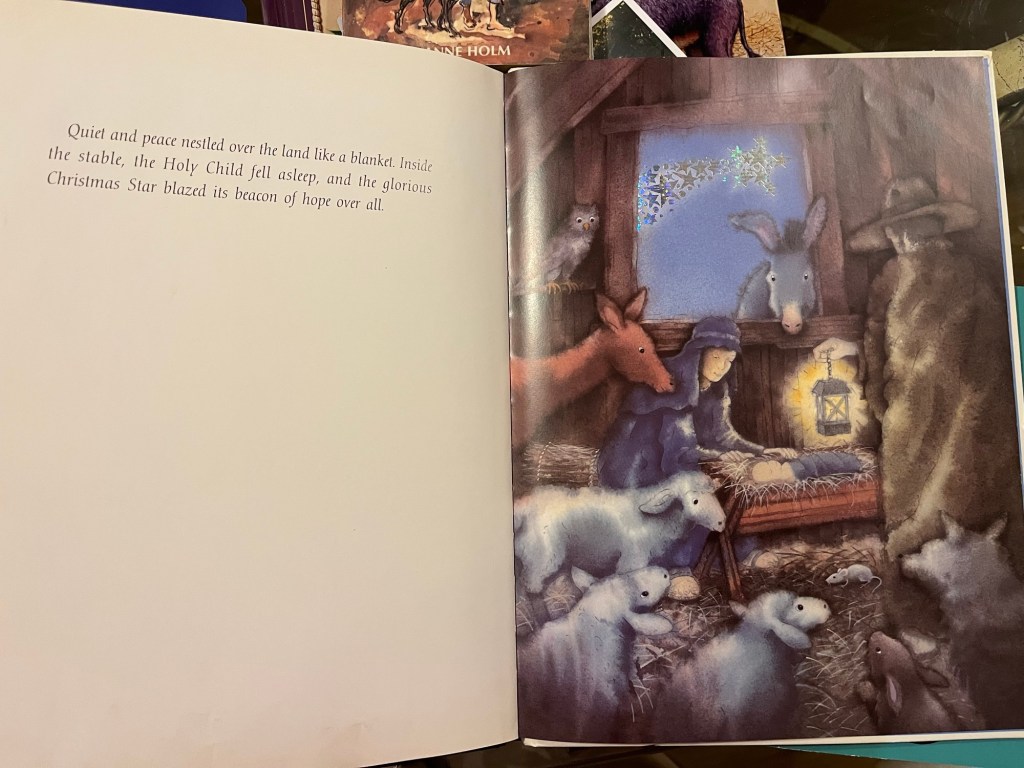
In a poor and lowly stable the little child was born.

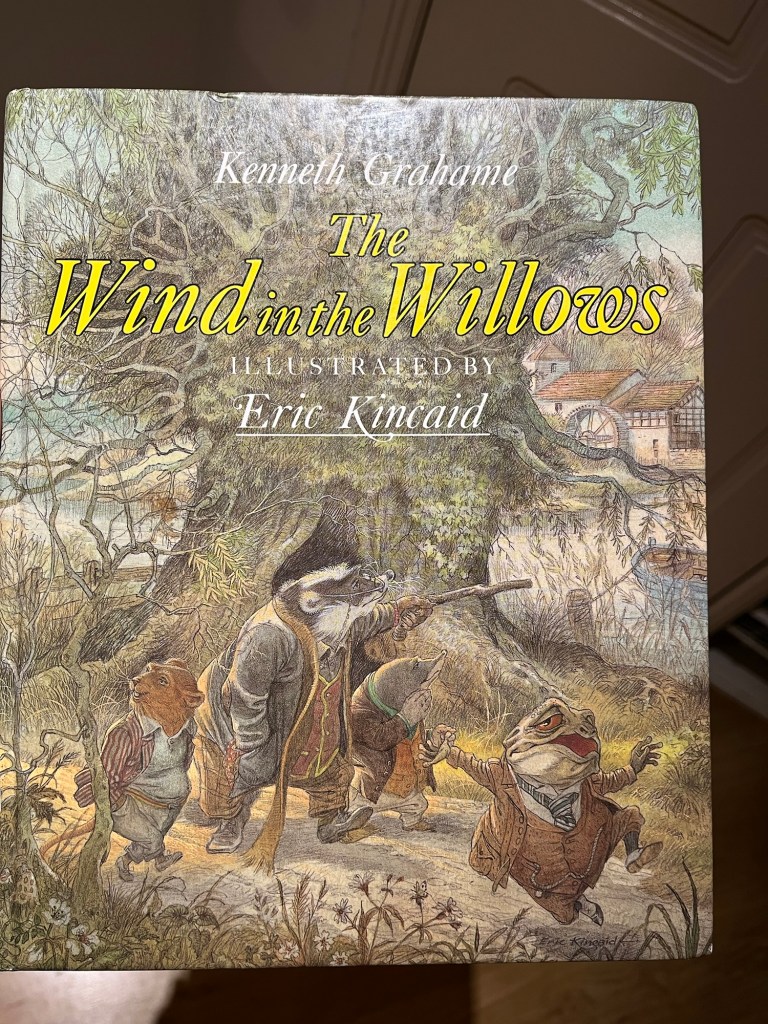
The Wind in the Willows

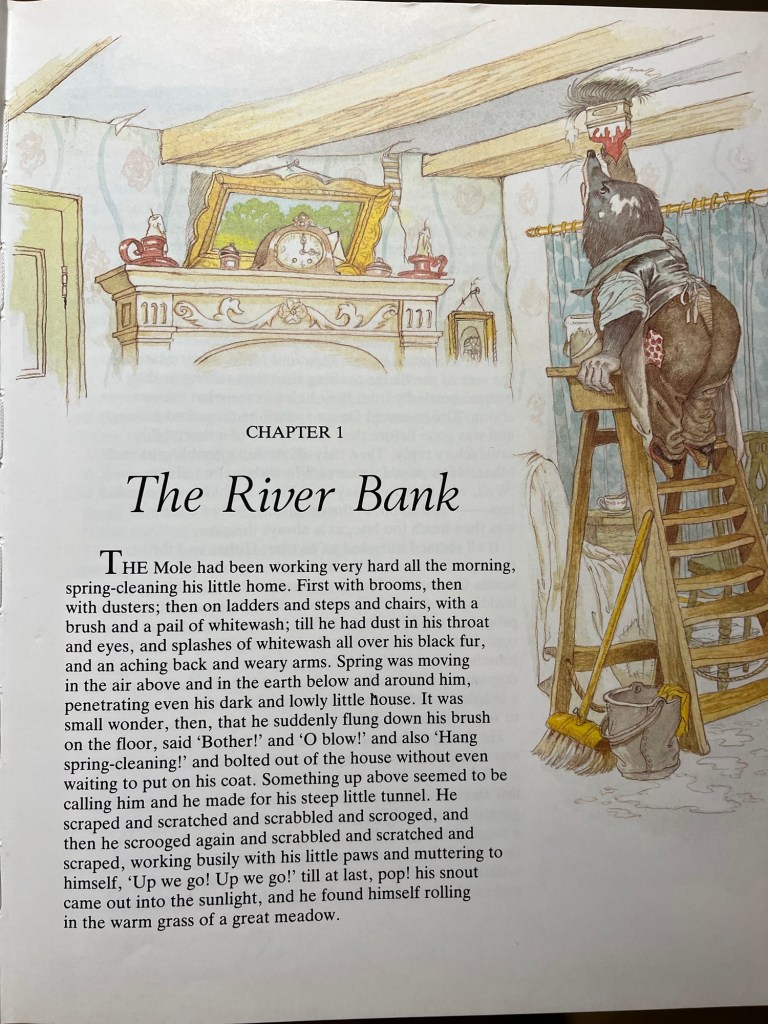
I have this version with beautiful illustrations by Eric Kincaid.

When Spring rolls around each year I think of the character of the mole doing his Spring cleaning in this book, and the wonderful animals that live on the riverbank.

The quote “Believe me, my young friend, there is nothing -absolutely nothing that’s half so much worth doing as simply messing around in boats.” is one that has stuck with me through my life. I was fortunate as a child to have access to a small dam that we could take a rubber boat on and explore. Being on the surface of the water and in a boat – there is something magical about it.

From The Wind in the Willows

The Wind in the Willows is a classic that has given generations of children countless hours of wonder and enjoyment.

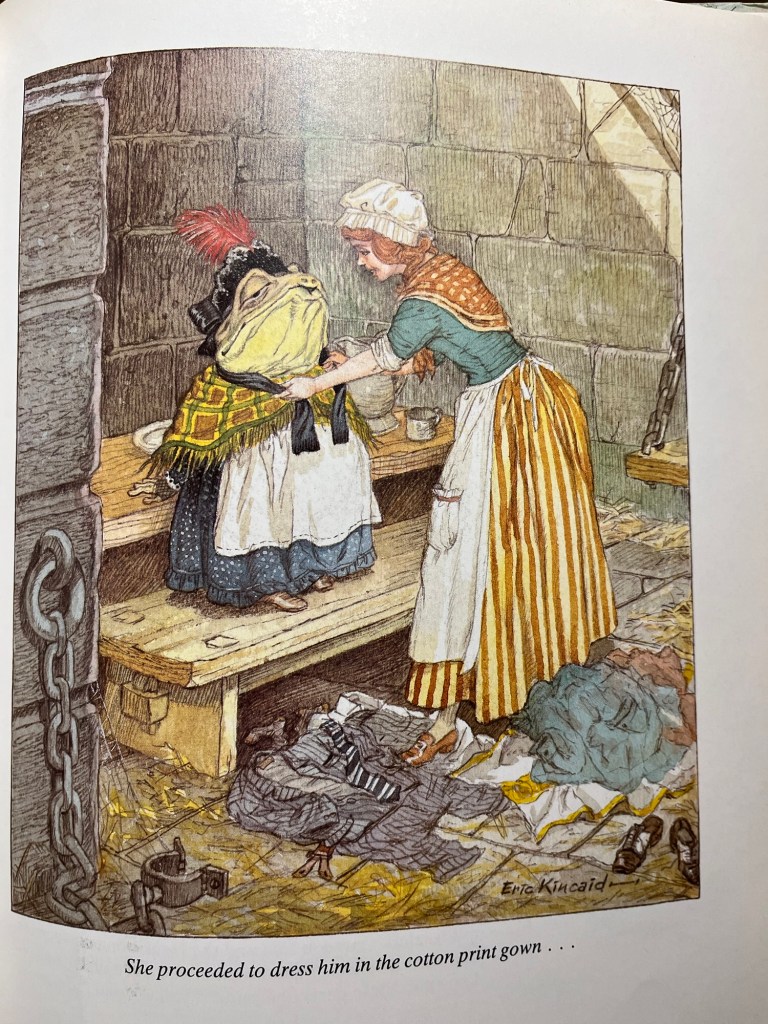
Who can forget the rowdy ‘toad’ and his first experiment with driving a car, albeit disguised as a washerwoman?

Toad gets in all sorts of trouble and has to disguise himself in order to get out of jail.

The gentle lull of the river calls to us as we sit back and meet all the animals of the riverbank, and see how toad gets himself into one and another mischief.

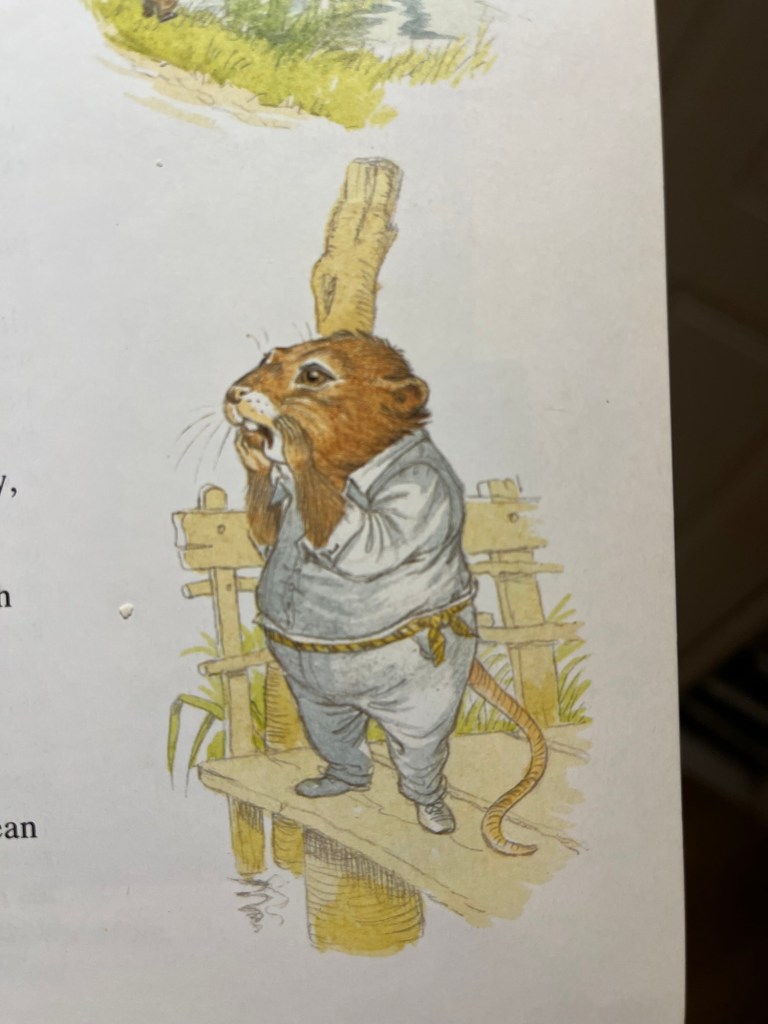
Neighbours talked to neighbours as ratty simply called across to mole to ask him out for a picnic.

The Wind in the Willows’ can be read aloud to younger children from about 7 years but there are shorter versions you can find in picture book format for even younger children to introduce them to it.

And mole simply called back that he would love to come. No texting!

The classic full novel is for children aged approximately 8-12 years. Grown ups will love meeting the animals of the riverbank too.

My name is Lizzie Flynn by Claire Saxby and Lizzy Newcomb

Based on the real life Rajah quilt made by convict women on board the Rajah whilst on their journey from England to Van Diemen’s Land (now “Tasmania”) in 1841.

The story spares nothing of the roughness and harsh conditions on board the convict ships. When a storm begins, ‘the hold becomes a groaning mass of writhing bodies, souped in a mix of vomit and filth.’ This book is not for the faint hearted, and as such is more suitable for upper primary, with explanations by an adult as to what is going on in the story.

One of the convict women, Molly, dies after having a fever. “They bury her in the heaving waters.” A Bible or religious book is shown in the illustration, with a Christian cross on the cover.

The main character becomes even more determined to not ‘pass from this world as if I had never been here.’ She works on the quilt, and when they arrive in Australia she is pleased that it will be a memento of the dying woman “Molly” and herself.

At the end of the book is some information about the Rajah quilt. It states that it was ‘lost for 147 years before being rediscovered in a Scottish attic.’

It is now housed in the National Gallery of Australia in Canberra.

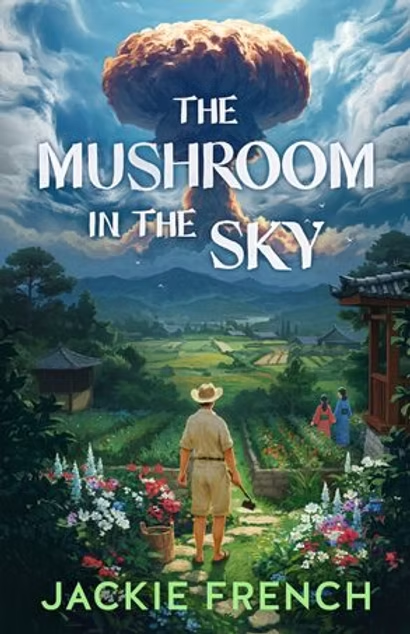
Review of the book “The Mushroom in the Sky” by Jackie French (Angus & Robertson, 2025)

It is 1942. Japanese forces have attacked Sydney Harbour.

An elderly lady in New South Wales kindly takes on the caring of some 46 dogs for their owners who are away protecting their country.

“Kat” is a young girl of 13 who helps look after and play with the dogs, taking on “Lucky” for one owner and writing letters to him while he is away. She develops a mysterious connection to him through his dog and is able to ‘see and feel’ what he is going through on the other side of the world.

Kat’s school, St Marys, sings the well-loved anthem “Abide with me” to comfort families who have lost loved ones.

When the atomic bombs are dropped at Nagasaki and Hiroshima, Kat mysteriously senses the strange white mushroom cloud from her location in New South Wales – before it is announced on the news. She senses that her dog’s owner is in trouble.

Then she finds out that whole cities and the people in them have turned to white dust. People are blinded, some see only rainbows on the edge of their vision from the toxic effects of the atomic bomb.

Author Jackie French has used real first-hand accounts from diaries and primary sources of those who were in the area when it was bombed.

End notes also state that the Japan of then is not the Japan of today. a small Japanese military encouraged mothers to take their own lives and their children’s lives rather than surrender to the Allies. The story outlines the difficult problem of enforced rape and suicide of civilian populations during wartime.

The role of the Jesuits in providing aid and Communion to those who wanted it is mentioned, based on factual events.

The characters are fictional except for General MacArthur, prime ministers Churchill, Curtin and Chifley, and Emperor Hirohito. The events of the story are also fiction, but are based on real life events that happened during World War Two.

The author ‘neither condones nor condemns the bombings’, and cautions that ‘once war begins it is very difficult to stop.’

The book offers the reader the opportunity to reflect on the personal costs of war to both soldiers and non-combatants.

After reading it I learned about history from the perspective of the Japanese people – often caught sadly under a fierce Japanese military.

An interesting and thought provoking story.